Data Dives: Player Metrics That Turbocharge Turnkey iGaming Valuations
Data Dives: Player Metrics That Turbocharge Turnkey iGaming Valuations

Why Player Data Drives the Big Bucks in Turnkey Sales
Turnkey iGaming platforms, those ready-to-launch casino sites complete with software, games, and backend systems, fetch top dollar when buyer interest spikes; and what's fueling those sky-high bids comes down to cold, hard player metrics that paint a picture of real revenue potential. Data from recent sales reveals platforms with strong user engagement metrics command premiums up to 40% higher than average, since buyers scrutinize numbers like monthly active users (MAUs) and lifetime value (LTV) to forecast cash flow. Experts who've analyzed hundreds of these deals note how a site boasting 5,000 MAUs alongside solid retention can flip for seven figures overnight, whereas stagnant player bases drag valuations into the low sixes, even with flashy domains or game libraries.
But here's the thing: it's not just about raw headcount; savvy brokers dive deep into behavioral data, where engagement scores—think session length and frequency—separate the winners from the also-rans. Figures from the American Gaming Association's 2025 State of the States report highlight how U.S.-facing platforms with average sessions exceeding 30 minutes per user see retention rates climb 25%, directly boosting sale prices as buyers project sustained profitability. And while platforms chase these metrics, those who've tracked April 2026 market shifts observe a fresh wave of acquisitions where AI-optimized player funnels pushed valuations past traditional benchmarks.
Core Metrics: Active Users and Retention Rates That Seal the Deal
Monthly active users stand as the bedrock metric, with platforms reporting 10,000+ MAUs often valuing at 3-5 times annual gross gaming revenue (GGR), since this number signals scalable demand without proportional marketing spend. Retention rates, particularly day-1, day-7, and day-30 cohorts, take it further; data indicates sites holding 40% day-30 retention command 2.5x multiples compared to industry averages hovering around 20%, because sustained play translates to predictable deposits and reduced churn costs.
Take one broker-handled sale from early 2026, where a European-facing turnkey site flipped for $2.8 million after showcasing 45% D30 retention among 8,200 MAUs; buyers zeroed in on cohort analysis revealing VIP retention at 65%, which promised long-term LTV spikes. Researchers who've crunched similar datasets point out how these rates correlate directly with algorithmic personalization, where platforms using player history to tailor bonuses keep users hooked longer, thus inflating exit multiples.
What's interesting surfaces in geographic splits: North American platforms lean on daily active users (DAUs) for valuations, with DAU/MAU ratios above 25% signaling sticky engagement; Australian operators, per reports from the Queensland Government's gaming statistics, prioritize 90-day retention, where figures north of 35% have turbocharged sales amid regulatory stability.
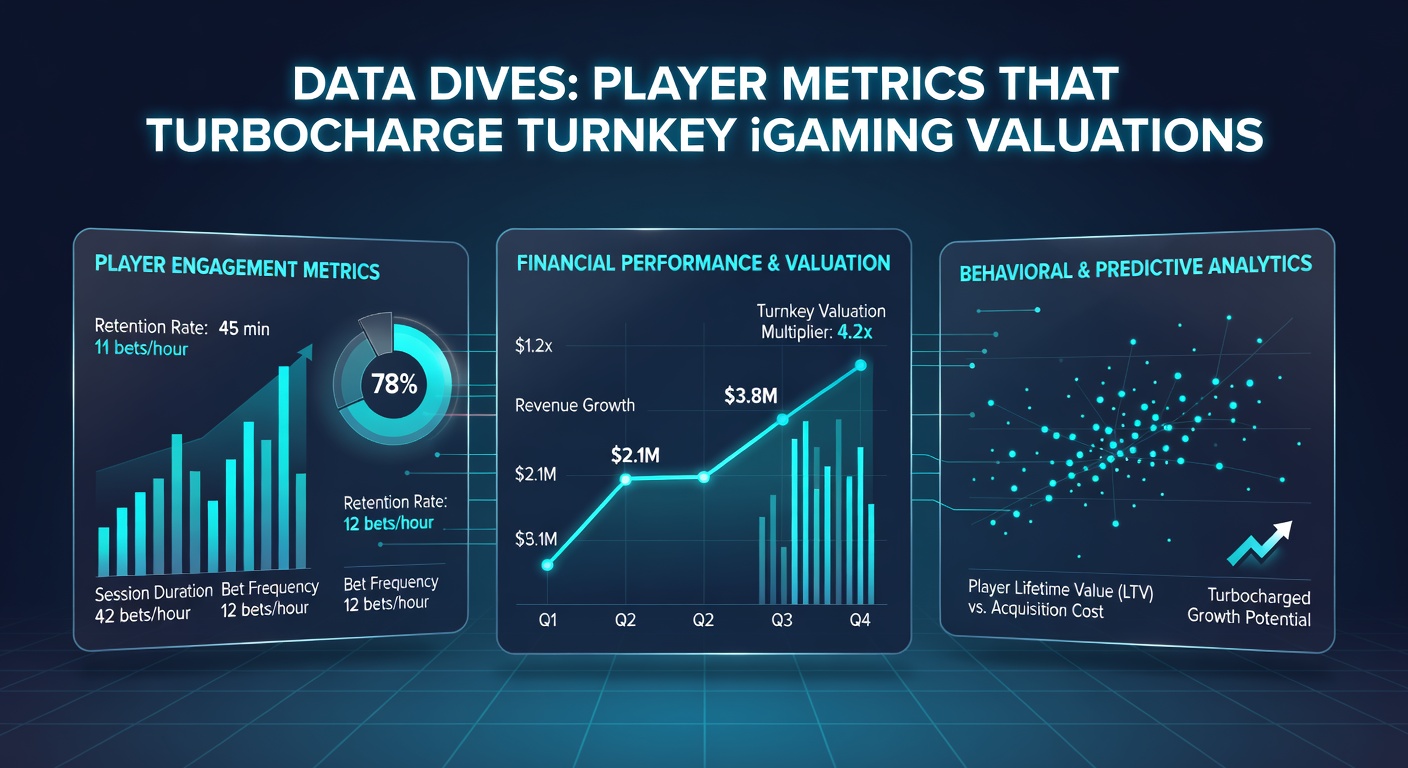
Revenue Rockets: ARPU, LTV, and Churn in the Valuation Spotlight
Average revenue per user (ARPU) cuts through the noise, as platforms averaging $150+ monthly ARPU per active player snag bids reflecting 4x forward revenue projections, while sub-$50 sites struggle below 2x; and when layered with customer lifetime value (LTV), which factors deposit frequency, average bet size, and tenure, the math gets compelling—LTVs exceeding $1,200 have propelled turnkey deals into eight-figure territory for multi-site portfolios.
Churn rate flips the script, though; sites capping voluntary churn below 5% monthly draw premium offers, since low churn means lower reactivation costs and steadier cash flows, with data showing each percentage point drop in churn lifts valuations by 10-15%. Observers note a case from mid-2025 where a sportsbook-integrated casino reduced churn from 12% to 4% via loyalty programs, resulting in a $1.5 million sale at 4.8x GGR—proof that retention tech pays dividends at handover.
Yet deeper dives reveal LTV nuances: high-rollers contributing 80/20 to revenue (Pareto's law in action) demand segmented metrics, where VIP LTVs averaging $10,000+ signal whale potential; platforms ignoring this slice often undervalue themselves, as buyers discount for over-reliance on casual players prone to fad churn.
Acquisition Efficiency: CAC and ROI Metrics Buyers Can't Ignore
Customer acquisition cost (CAC) paired with return on ad spend (ROAS) emerges as the efficiency kingpin, with platforms achieving CAC under $200 per first-time depositor (FTD) and ROAS above 3x commanding outsized multiples; because when marketing dollars convert efficiently, scalability beckons, turning modest sites into portfolio crown jewels.
Figures from industry trackers show top-quartile turnkeys boast FTD-to-MAUs conversion rates over 15%, slashing effective CAC while ballooning valuations; one expert-analyzed flip saw a site with $150 CAC and 4.2x ROAS sell for 5.2x revenue, as buyers banked on geo-expansion without bloated budgets. And as April 2026 data rolls in, observers spot rising emphasis on organic traffic metrics—SEO-driven FTDs costing near-zero CAC have sparked bidding wars for content-rich platforms.
But here's where it gets nuanced: lifetime CAC payback periods under 6 months set records, since quick ROI frees capital for growth; sites stretching beyond 12 months face valuation haircuts, even with flashy player counts.
Advanced Plays: Engagement Depth and Predictive Analytics
Beyond basics, wager frequency, bet sizing variance, and game affinity scores add layers; platforms with average daily wagers per user above 50 and low house-edge exploitation see 20% valuation uplifts, as these signal sophisticated players less swayed by promotions. Predictive churn models, now standard in 70% of premium turnkeys, forecast LTV with 85% accuracy, giving buyers confidence in post-sale tweaks.
People who've dissected April 2026 auctions recount a standout: a slots-heavy site with AI-driven engagement scores (session depth over 45 minutes, cross-game play at 3+ titles weekly) fetched $3.2 million at 6x GGR, outpacing peers by highlighting fraud-resistant, high-margin play patterns. That's where the rubber meets the road—metrics proving stickiness amid regulatory flux turn skeptics into bidders.
Compliance-adjacent data, like self-exclusion rates under 2% and KYC completion speeds below 24 hours, quietly bolsters trust; buyers factor these into risk discounts, rewarding platforms with clean audit trails.
Putting It All Together: Metrics in Motion for 2026 and Beyond
Holistic dashboards blending these metrics—MAUs, retention cascades, ARPU trajectories, churn waterfalls, CAC funnels—dominate broker pitch decks, with integrated tools from providers like Tableau or custom BI suites enabling real-time buyer demos that close deals faster. Turns out, platforms updating metrics weekly during due diligence snag 15% higher offers, as transparency builds momentum.
Case in point: a mid-2026 portfolio sale bundled three turnkeys with unified player data APIs, revealing cross-site LTV synergies that justified a $7.5 million tag at blended 5.3x multiples; without that data depth, fragmentation would have halved the price.
Conclusion
Player metrics form the turbochargers propelling turnkey iGaming valuations into the stratosphere, where active user growth, ironclad retention, revenue potency, efficient acquisition, and predictive insights converge to dictate deal sizes; data underscores how platforms mastering these elements not only attract premium bids but sustain post-sale trajectories. As markets evolve through 2026, those wielding granular, real-time player dives hold the edge, turning numbers into nine-figure narratives for brokers and buyers alike.