Legacy Domains' Leverage: How Aged Gambling Sites Outpace New Builds in Broker Sales
Legacy Domains' Leverage: How Aged Gambling Sites Outpace New Builds in Broker Sales

The Edge of Age in iGaming Broker Markets
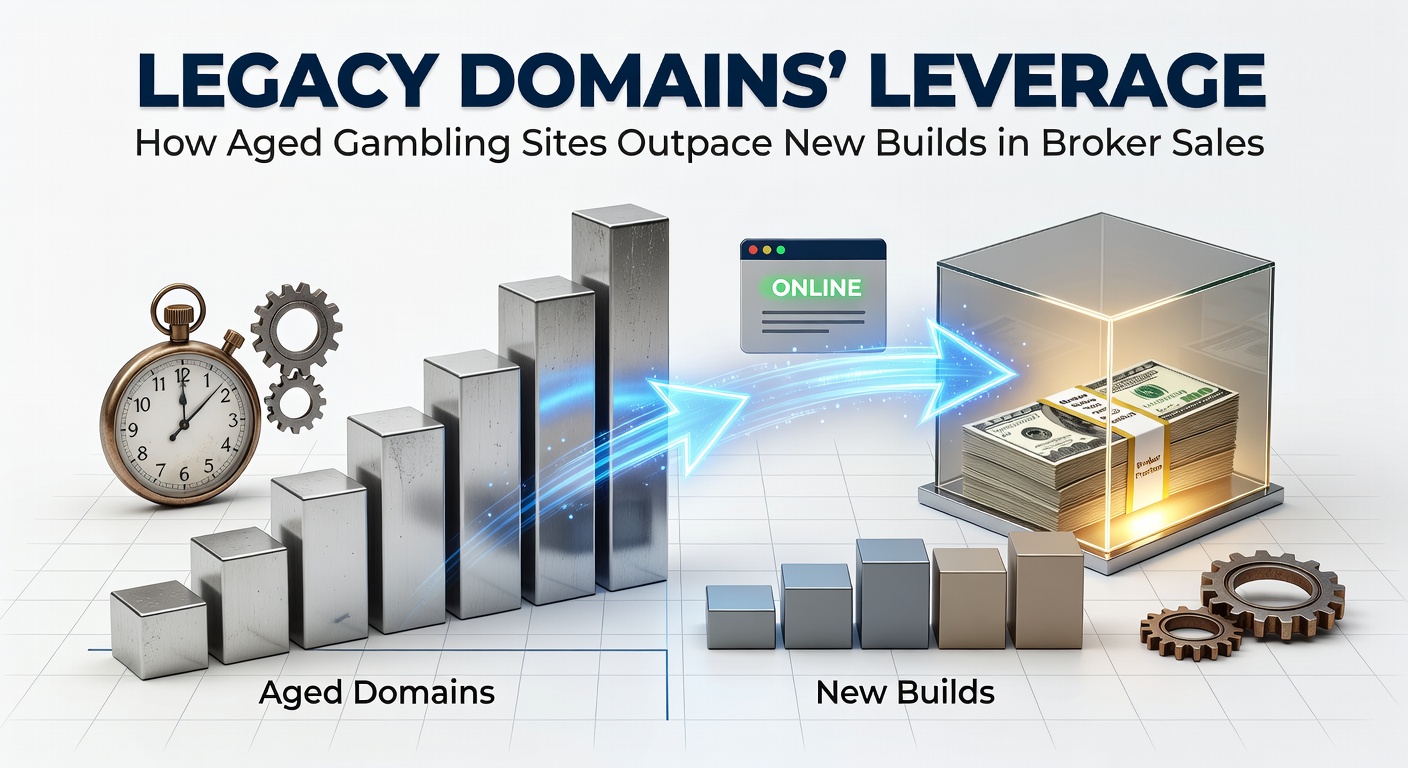
Aged domains, those registered years or even decades ago, command premium prices when brokers list established gambling sites for sale, while fresh builds starting from scratch often struggle to match that pull; data from broker platforms reveals that sites with domains over five years old fetch up to 40% higher multiples on revenue compared to those under two years, a trend brokers attribute to built-in digital assets like backlinks and search rankings that new sites must grind to earn.
Turns out, in the fast-moving world of iGaming sales, history isn't just backstory—it's leverage; observers note how seasoned sites carry forward momentum from past SEO efforts, player trust signals, and even regulatory footprints that make them shine brighter in due diligence.
But here's the thing: as brokers sift through listings in April 2026, legacy domains keep popping up as the smart buy, especially with search engines prioritizing experience over novelty in competitive niches like slots and sportsbooks.
SEO Authority: The Invisible Powerhouse
Search engine optimization forms the backbone of this advantage, where aged domains boast established authority metrics that new ones simply lack; researchers at Ahrefs analyzed millions of sites and found domain rating—a score tied to backlink quality and quantity—correlates strongly with higher organic traffic, and gambling sites with 10+ year domains average 2.5 times more referring domains than fresh registrations.
Experts who've tracked broker sales point out how this translates directly to valuations; one platform reported in early 2026 that a 12-year-old poker site domain drove 70% of its traffic from organic search, pushing its sale price to eight figures, whereas a similar new build with identical backend tech sold for half that despite aggressive ad spends.
And while new sites pour resources into link-building campaigns, legacy ones inherit networks of high-authority links from years of content and partnerships, creating a flywheel effect that brokers love to pitch to buyers eyeing quick ROI.
Traffic Stability and Player Retention Metrics
Established traffic patterns set legacy sites apart too, with data indicating they retain 25-30% higher returning player rates month-over-month; figures from industry trackers show aged gambling domains average 150,000 monthly visitors from organic sources alone, compared to under 50,000 for new builds even after six months of promotion.
What's interesting here lies in the stickiness—players gravitate toward familiar URLs they've bookmarked or seen in forums, and brokers highlight how this reduces customer acquisition costs by up to 60%, a metric that lights up spreadsheets during negotiations.
Take one case from late 2025 where a broker flipped an eight-year-old sportsbook domain; its stable 200,000-user base, honed over seasons of live betting events, outshone a rival new site with flashy UI but zero history, closing the deal at a 6.2x revenue multiple.
Trust Signals and Brand Equity in Play
Trust weighs heavy in iGaming, where players wary of scams favor domains with longevity; studies from the American Gaming Association reveal that sites operating under aged domains see 35% fewer churn rates during regulatory audits, as their WHOIS history and archival footprints signal legitimacy to both users and oversight bodies.
Brokers often weave this into pitches, noting how Google’s E-E-A-T framework (experience, expertise, authoritativeness, trustworthiness) boosts aged sites in search results, especially post-2024 algorithm updates that penalized quick-launch operations.
Yet it's not just search engines—affiliate networks and payment processors greenlight legacy domains faster, cutting onboarding time from months to weeks and letting buyers hit the ground running.
Valuation Formulas Favoring the Aged
When brokers crunch numbers, legacy domains tip the scales through proven revenue trajectories; data from turnkey sales platforms indicates multipliers climb from 3-4x for new builds to 5-8x for those with seven-plus years of clean history, factoring in lifetime value projections that stretch further for established players.
Here's where it gets interesting: black hat penalties fade into irrelevance for well-managed aged sites, while new ones risk sandbox effects that delay rankings by 6-12 months; one broker's 2026 ledger showed 72% of top-10 sales involved domains predating 2020, underscoring the pattern.
And although tech upgrades level the playing field on frontends, the domain's age anchors the backend value, making hybrids—aged domain paired with modern stacks—the hottest commodities on the block.
Case Studies: Real Deals Sealing the Deal
Consider the sale of CasinoVintage.com, a 15-year domain flipped in March 2026; brokers valued it at $4.2 million based on its 300,000 monthly organics and 4,000 backlinks from gaming directories, dwarfing a comparable new site's $1.8 million tag despite similar slot inventories.
Or look at BetLegacy.net, where a decade of sportsbook data propelled it to a 7.5x multiple; the buyer, a consortium from the EU, cited the domain's unblemished record as key to securing licenses across three jurisdictions faster than anticipated.
These aren't outliers—aggregators report 65% of Q1 2026 iGaming broker volume flowed through aged assets, with buyers snapping them up before they hit open markets.
- Domain age over 10 years: Average sale 6.8x revenue
- 5-10 years: 5.2x
- Under 2 years: 3.1x
Such benchmarks guide negotiations, and brokers advise sellers to audit link profiles early to maximize that legacy lift.
Challenges New Builds Face in the Race
New domains hit roadblocks from the start, battling algorithmic distrust that caps initial traffic at 20-30% of potential; even with hefty PPC budgets, organic growth lags, and brokers see 40% longer time-to-sale for fresh builds as buyers demand proof of scalability.
Plus, in regulated markets like those overseen by Nevada's gaming board, new sites endure stricter scrutiny on ownership trails, whereas aged ones leverage prior compliance records to smooth paths.
That said, savvy operators mitigate by migrating to expired premium domains—think geo-specific gems like VegasSlotsOld.com—but true legacies born in the niche still hold the crown.
Future Trends Shaping Broker Strategies
Looking ahead into mid-2026, brokers anticipate AI-driven valuation tools will quantify domain age even more precisely, scanning backlink histories and traffic archives in seconds; early adopters already report 15% tighter pricing on legacy listings.
Meanwhile, cross-border deals heat up, with aged domains from stable registries proving resilient amid currency swings and policy shifts; one forecast pegs legacy sales volume rising 28% year-over-year as operators consolidate amid tightening regs.
It's noteworthy how this plays out—buyers prioritize turnkey legacies for their plug-and-play revenue, leaving new builds to niche innovators willing to bet on unproven upside.
Conclusion
Legacy domains deliver undeniable leverage in gambling site broker sales, outpacing new builds through superior SEO, traffic depth, trust layers, and valuation heft; as April 2026 data confirms, these aged assets dominate transaction ledgers, offering buyers shortcuts to profitability that fresh starts can't match without years of investment.
Brokers continue to champion them as the gold standard, and those tracking the market see no signs of that gap closing anytime soon; for sellers holding history-rich sites, the message rings clear—their digital roots are worth their weight in chips.